digital painting - photo manipulation - stack filtering - image processing - slit scan - studio artist
Showing posts with label normalization. Show all posts

Saturday, September 25, 2010

Mutation 44


This portrait was generated by stack filtering the spatially normalized set of self portraits with the temporal difference1 filter.

Friday, September 24, 2010

Mutation 43


This portrait was generated by processing the spatially normalized self portraits with a temporal rank neighborhood filter.

Thursday, September 23, 2010

Mutation 42


This portrait was generated by stack filtering the spatially aligned self portraits with a different temporal rank neighborhood filter preset.

Wednesday, September 22, 2010

Mutation 41


This portrait was generated by stack filtering the spatially normalized self portraits with the temporal rank neighborhood filter.

Tuesday, September 21, 2010

Mutation 40


This portrait was generated by stack filtering the spatially normalized slef portraits with the temporal scan tracker 2 smart seam processing using a horizontal scan and a wide temporal processing window.

Monday, September 20, 2010

Mutation 39


This portrait was generated by stack filtering the spatially normalized self portraits with the temporal scan tracker 2 smart seam processing, using a vertical scan direction.

Sunday, September 19, 2010

Mutation 38


This portrait was generated by stack filtering the spatially normalized self portrait stack with the temporal scan tracker 2 processing, using the new smart seam feature.

Saturday, September 18, 2010

Mutation 37


This portrait was generated by stack filtering the spatially normalized self portraits with the temporal difference1 filter.

Friday, September 17, 2010

Mutation 38


This image was generated by processing the spatially aligned portraits with a temporal displacement filter. The displacement is based on one of the normalized self portraits chosen at random.

Thursday, September 16, 2010

Mutation 37


This portrait was generated by processing the spatially normalized self portraits with the temporal motion rank min filter.

Wednesday, September 15, 2010

Mutation 36


This portrait was generated by stack filtering the spatially normalized set of self portraits with the temporal motion rank max filter.

Tuesday, September 14, 2010

Mutation 35


This portrait was generated by processing the complete set of self-aligned spatially normalized portraits with the temporal rank mean difference mask filter.

Monday, September 13, 2010

Mutation 34


This portrait image was generated by processing the complete set of spatially aligned self-normalized portraits with the temporal rank MinMask filter.

Sunday, September 12, 2010

Mutation 33


This image was generated by stack filtering the complete set of spatially normalized self portraits with the temporal rank median maximum distance filter.

Saturday, September 11, 2010

Mutation 32


The daily portrait virus mutation posts are going to switch gears slightly for awhile. This new set is based using Michael's daily self portrait virus blog imagery as the source for stack filtering. As opposed to the Siggraph 2010 portrait virus imagery that has been used to date.

The other factor that is slightly different is that during the process of running this whole portrait virus mutation experiment we found a bug in the inverse warp code. I wasn't quite satisfied with the spatially aligned imagery being generated by the stack filtering algorithms. And indeed once the inverse warp code was improved the results of spatially aligned stack filtering did as well.

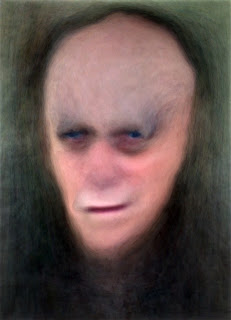
For example, the image above was generated by processing all of Michael's self portrait paintings to date with a temporal mean filter. So you can think of the image as being the generic self portrait. It's like the average portrait, but with all of the face paintings mutually aligned to a standardized portrait (one of the portrait virus images selected at random). The temporal median is also very similar (it isn't always the case).

There's a Studio Artist news blog post on stack filtering portrait images that explains the principals behind how this image was generated (and stack filtering in general) in detail.

At some point i may return to the Siggraph 2010 portrait virus images and redo some of the spatially aligned results shown here, because i think they would be more in line with how i originally thought they would turn out. I had thought about redoing all of the old posts, but discussed this in a Studio Artist Forum post. Part of the point of generating artistic imagery is that mistakes may be just as interesting as technically correct results (sometimes more so). So leaving things the way they progressed as this project developed seemed to make more sense.

Friday, August 13, 2010

Mutation 4


This image is an example that was built from a spatially normalized stack of portrait virus images. By spatial normalization i mean that every painted portrait was spatially warped to a standard portrait facial position. The standard position was just one portrait that i randomly picked out of the 2010 Siggraph portrait virus set. Every other portrait was spatially warped to match the standard position. I'll discuss the mechanics of that process at a later time. The resulting image was generated with the temporal rank filter and can be thought of as the average of all of the portrait virus images. So you could think of it as the generic portrait derived from the entire set.

I've generated another image below that uses the same process, but with the original non-spatially normalized portraits as the input stack. Note that it's much more of a blur and doesn't capture as much of the facial distinctions and detailing of the overall set of portraits.


It does tell us something about the overall set of original portraits (from the standpoint of visualization analysis), mainly that in average the faces do tend to be centered. And for some temporal processing effects that spatial variation of the individual portraits can lead to visually interesting results. But for other processing effects working with the spatially normalized image set can lead to very different results.